Drainback Solar Thermal System Maintenance
On top of the standard two-minute monthly maintenance checks, drainback systems need extra care. There are four main problems that could occur in a drainback system:
If you are going to install solar collectors on your home's roof, take a trip up there to inspect the mounting location before you try to lift the collectors into place. You need to check a variety of important factors and you don't want to find yourself in a situation where you have the collector ready to be bolted into place, but the site is inappropriate!
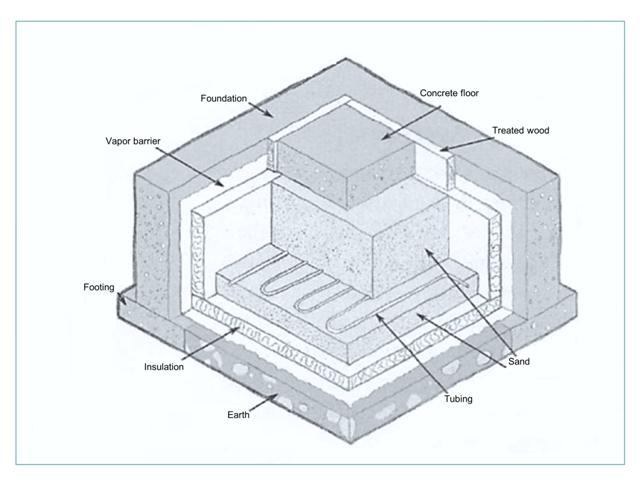
Before you begin laying Pex tubes into your heating area, you must prepare the ground. The area should be flat and level, with the insulation in place and a vapor barrier under the insulation. If you are going to enclose the Pex tubes in a slab, you can cover the insulation with reinforcing wire or rebar.
A pressurized solar thermal installation is one of the most robust options available. Your standard two-minute monthly maintenance checks should suffice to keep the system in perfect working order for at least 10 years, though you should add a pressure check to the monthly routine just to keep an eye on things.
After the first 10 years have passed, you will need to check for three possible problems:
At this point in your solar thermal installation project, you should know what kind of collector you're installing, the model you've chosen, what kind of attachment brackets it uses, where the collector will be installed and that your roof is in good repair and can carry the weight. If you haven't checked those things, you should do so.
There are three main ways to securely mount solar collector on a roof:
Solar swimming pool systems are among the simplest available. Maintenance is equally simple and is carried out at the start of the warm season, before the system is used.
So you've worked out which solar collectors you need, how many to install, their optimum tilt angles and everything else. Now you need to physically check that you have the roof space and plan for the installation.
Very few solar thermal space heating installations provide 100% of a home's heating requirements year-round, so a grid-tied backup is almost always required. It is obviously a lot more efficient – particularly financially – to use the same heat delivery equipment for both systems wherever possible.